Overview of Imported Mosquito-Borne Infectious Diseases
Definition
- Imported mosquito-borne infectious diseases are infections that primarily occur through bites from mosquitoes carrying disease-specific viruses. These include dengue fever, chikungunya fever, Zika virus infection, West Nile fever, and yellow fever.
- For mosquito-borne infectious diseases, if treatment is delayed, the fatality rate can reach 20–30%. Therefore, early diagnosis and treatment are critical for prognosis.
Major Mosquito Vectors in Korea
| Major Vectors in Korea | Vector-Borne Infectious Disease | Source of Occurrence |
|---|---|---|
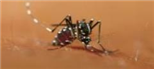 Aedes albopictus |
Yellow fever, Dengue fever, Chikungunya fever, Zika virus infection | Artificial containers with water collected in stone, plastic, rubber, metal, discarded tires, etc. as well as naturally formed small rock or soil puddles and tree holes |
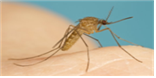 Culex pipiens complex - Culex pipiens pallens - Culex pipiens molestus |
West Nile Fever | Sewers, artificial containers, fire-fighting water reservoirs, polluted watercress fields, stagnant water in empty cans, large underground floors, apartment underground floors, septic tanks |
Current Status of Imported Mosquito-Borne Infectious Diseases
- (Dengue fever) Since being designated as a Group 4 national notifiable infectious disease in 2000, imported cases have continued to be reported.
- (Chikungunya fever) Since being designated as a Group 4 national notifiable infectious disease in 2010, imported infection cases have been continuously reported since 2013.
- (Zika virus infection) Since being designated as a Group 4 national notifiable infectious disease in 2016, imported cases have continued to be reported.
- (West Nile fever) Since the first reported imported case in September 2012, no domestic cases have been reported to date.
- (Yellow fever) Since being designated as a national notifiable infectious disease on July 1, 1977, no domestic cases have been reported to date.
| Infectious Disease | Year | |||||||||
|---|---|---|---|---|---|---|---|---|---|---|
| 2015 | 2016 | 2017 | 2018 | 2019 | 2020 | 2021 | 2022 | 2023 | 2024 | |
| Dengue fever | 255 | 313 | 171 | 159 | 273 | 43 | 3 | 103 | 206 | 196 |
| Chikungunya fever | 2 | 10 | 5 | 3 | 16 | 1 | 0 | 8 | 13 | 9 |
| Zika virus infection | 0 | 16 | 11 | 3 | 3 | 1 | 0 | 3 | 2 | 0 |
| West Nile fever | 0 | 0 | 0 | 0 | 0 | 0 | 0 | 0 | 0 | 0 |
| Yellow fever | 0 | 0 | 0 | 0 | 0 | 0 | 0 | 0 | 0 | 0 |
Major Symptoms
Dengue fever
- The incubation period is 5–7 days, accompanied by headache, muscle pain, rash, and joint pain, with most cases presenting nonspecific symptoms.
- Dengue virus has four serotypes, and secondary infection with a different serotype can progress to severe dengue (dengue hemorrhagic fever, dengue shock syndrome).
- The incubation period is 1–12 days, with main symptoms including acute fever and joint pain. Other symptoms may include headache, muscle pain, joint swelling, or rash, and fatigue can persist for several weeks.
- The incubation period is 3–14 days, accompanied by maculopapular rash, fever, muscle pain, conjunctivitis, and headache.
- Infection during pregnancy can cause microcephaly or other congenital disabilities in the fetus.
- The incubation period is 2–14 days, with clinical symptoms appearing in about 25% of infected individuals.
- Symptoms include fever, chills, headache, loss of appetite, muscle pain, nausea, vomiting, and rash. In severe cases, meningitis, encephalitis, acute flaccid paralysis, or acute central or peripheral nervous system abnormalities may occur.
- The incubation period is 3–6 days, with symptoms including fever, jaundice, headache, nausea, vomiting, muscle pain, and back pain.
- In severe cases, liver failure, kidney failure, cardiovascular symptoms, and hemorrhage may occur.
Vaccination
- A preventive vaccine is available for yellow fever, and most countries in endemic regions require a vaccination certificate prior to entry. Therefore, it is necessary to check the eligible population for vaccination, contraindications, and precautions, and receive the vaccine at least 10 days before entering high-risk areas. Vaccinations are administered at 47 internationally certified vaccination centers.
- There are no domestically approved or commercially available vaccines for dengue fever, chikungunya fever, West Nile fever, or Zika virus infection.
Preventive Measures
- Check information on infectious diseases to watch out for by travel region. Country-specific information on infectious diseases can be found on the Korea Disease Control and Prevention Agency (KDCA) website(http://www.kdca.go.kr) and mobile site(http://m.kdca.go.kr)
- When traveling, prepare appropriate repellents (repellents, mosquito nets, mosquito coils, etc.) and wear light-colored long-sleeved shirts and long pants to minimize mosquito bites.
- Mosquitoes are attracted to sweat, so always shower after outdoor activities.
- If suspected symptoms (fever, rash, joint pain, muscle pain, conjunctivitis, headache, etc.) occur within two weeks after returning, visit a medical institution, inform the healthcare provider of recent overseas travel history, and receive medical care.
- Even if no symptoms develop, refrain from donating blood during the deferral period (1–6 months) specified for each country visited.
Overview of Prevention and Control Programs for Imported Mosquito-Borne Infectious Diseases
Objective
- To prevent the introduction of viral mosquito-borne infectious diseases into the country and, in case of importation, to respond swiftly to prevent domestic mosquito transmission and the establishment of endemic viruses
Basic Direction
- Early detection and identification of occurrence patterns
- Thorough patient management
- Mosquito control
- Strengthening education, training, and public awareness for prevention and containment
Key Program Activities
- Infectious disease surveillance and management program
- Rapid and accurate identification of the occurrence and distribution of infectious diseases
- Efficient allocation of resources for infectious disease management.
- Vector surveillance and control program for infectious diseases
- Predict the timing of disease importation and epidemic patterns through vector surveillance (habitat presence, distribution, density, etc.)
- Implement effective control measures against domestic vectors to block transmission pathways
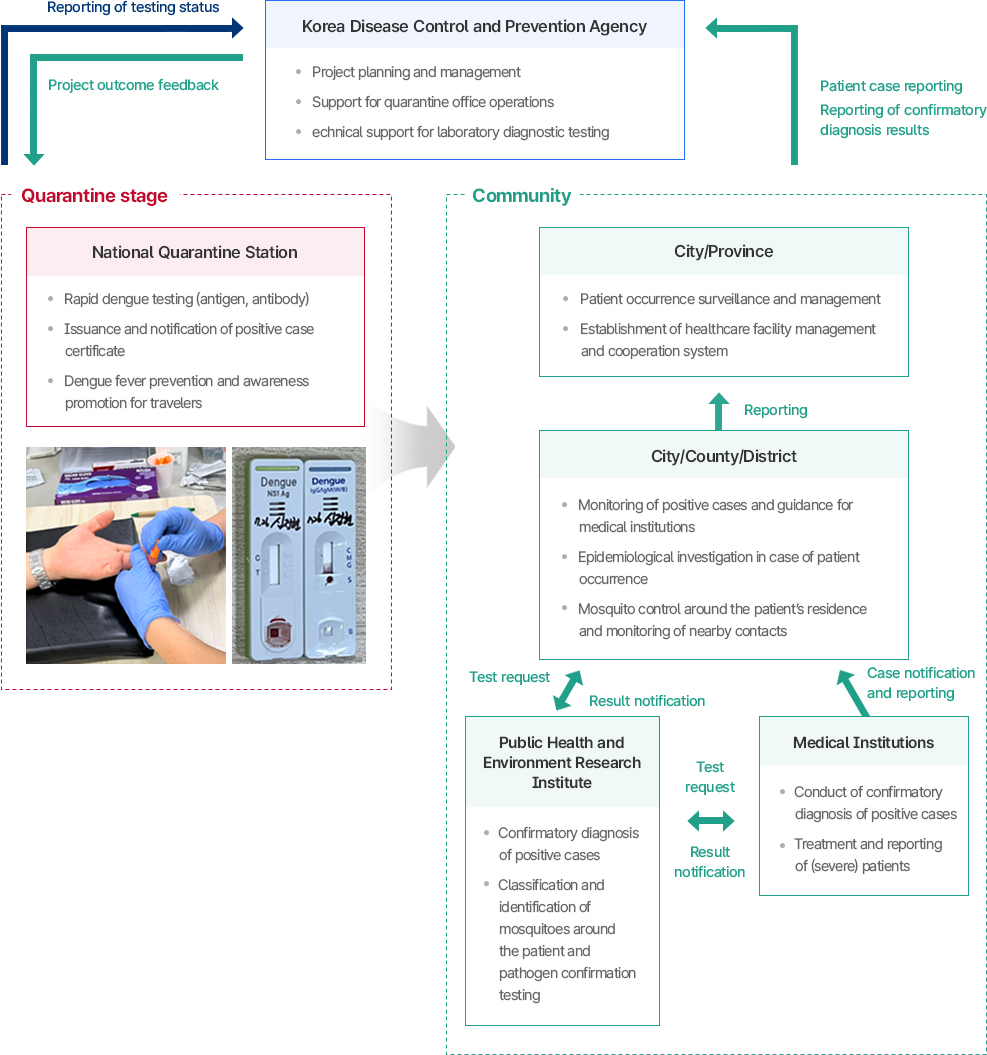
- Through the dengue fever early detection program at the quarantine stage, proactively identify dengue patients in advance rather than taking measures after occurrence, thereby preventing domestic importation
- Through regional dengue prevention and control programs, provide dengue prevention guidelines for safe overseas travel, establish systems for diagnosis and treatment of suspected dengue cases in the community, and prevent the endemic establishment of dengue in the country
Dengue Fever Early Detection Program Implementation System