
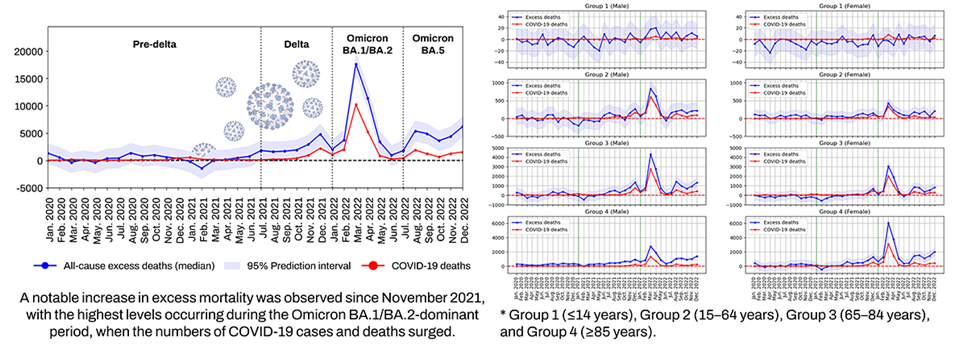
이 이미지는 코로나19 유행기간 동안 초과사망 발생 추이를 나타낸다. ■ 좌측 큰 그래프 (전체 초과사망 추이, 2020~2022) - 파란색 선: 전체 초과사망(All-cause excess deaths, median). - 빨간색 선: COVID-19 직접 사망자 수. - 연한 파란색 영역: 95% 예측 구간. - 구간 구분: Pre-delta(2020~2021 상반기), Delta(2021 하반기), Omicron BA.1/BA.2 (2022 초), Omicron BA.5 (2022 하반기). - 결과: 2021년 11월 이후 초과사망이 크게 증가, 특히 Omicron BA.1/BA.2 지배기(2022년 초)에 최고치 도달. 이후 감소했지만 2022년 말에도 초과사망 수준이 유지됨. ■ 우측 작은 그래프들 (연령·성별별 초과사망 추이) - Group 1 (≤14세), Group 2 (15~64세), Group 3 (65~84세), Group 4 (≥85세)로 나눔. - 각 그룹에서 남성과 여성별 그래프가 각각 제시됨. - 모든 연령대에서 초과사망은 COVID-19 사망자 수보다 높게 나타났으며, 특히 고령층(65세 이상, Group 3·4)에서 뚜렷한 급증이 확인됨. - 청소년 이하 그룹에서는 상대적으로 변동이 작고 안정적인 수준. ■ 종합 해석 - 코로나19 확진자와 직접 사망자 외에도, 간접 요인(의료체계 부담, 기저질환 악화 등)으로 인한 초과사망이 크게 증가했음을 보여줌. - 특히 2022년 초 오미크론 BA.1/BA.2 유행 시점에 가장 높은 초과사망 발생.
※ Source: Jang MJ et al., J Korean Med Science, 2024
- Analysis of patients with underlying conditions confirmed that mortality risk and changes in medical expenses vary by disease type, and follow-up research is underway
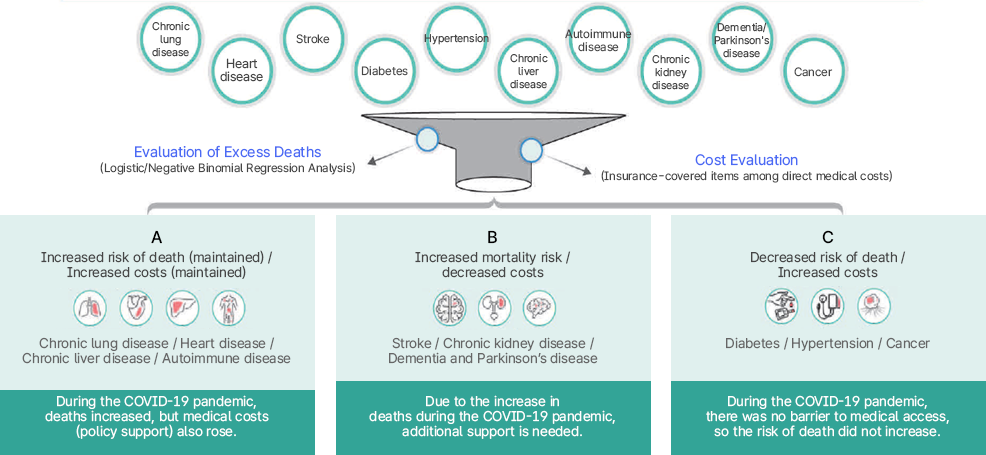
이 이미지는 기저질환자가 코로나19 유행 기간 동안 겪은 사망 위험과 의료비용 변화를 평가한 결과를 보여준다. ■ 평가 방식 - 초과 사망 평가는 로지스틱/음이항 회귀분석을 통해 이루어졌다. - 비용 평가는 직접 의료비 중 보험급여 항목을 기준으로 했다. ■ 대상 기저질환 - 만성 폐질환, 심장질환, 만성 간질환, 만성 신장질환, 뇌졸중, 당뇨병, 고혈압, 자가면역질환, 치매/파킨슨, 암. ■ 평가 결과 1. 가. 사망 위험 증가(유지) 및 비용 증가(유지) - 만성 폐질환, 심장질환, 만성 간질환, 자가면역질환. - 코로나19 유행 기간 동안 사망과 의료비용(정책 지원 포함)이 모두 증가하였다. 2. 나. 사망 위험 증가 및 비용 감소 - 뇌졸중, 만성 신장질환, 치매, 파킨슨병. - 사망은 증가했으나 의료비 지출은 줄어들어 추가적인 정책적 지원이 필요하다고 제시됨. 3. 다. 사망 위험 감소 및 비용 증가 - 당뇨병, 고혈압, 암. - 코로나19 유행 기간 동안 의료 접근장애가 적어 사망 위험은 증가하지 않았지만, 의료비용은 증가한 것으로 나타남. ■ 종합 해석 코로나19는 기저질환 유형에 따라 사망 위험과 의료비 지출에 다른 영향을 미쳤으며, 특히 만성질환군(폐질환, 심장질환 등)에서 위험 증가가 두드러져 맞춤형 정책 지원 필요성이 강조된다.
※ Source: In-depth Analysis Report on Health Impacts and Socioeconomic Burdens of COVID-19 on Vulnerable Groups (Individuals with Underlying Conditions), 2024
- The analysis of risk by disability status showed significant differences in the risk of severe progression based on the type of disability and age, highlighting the need for tailored public health approaches.
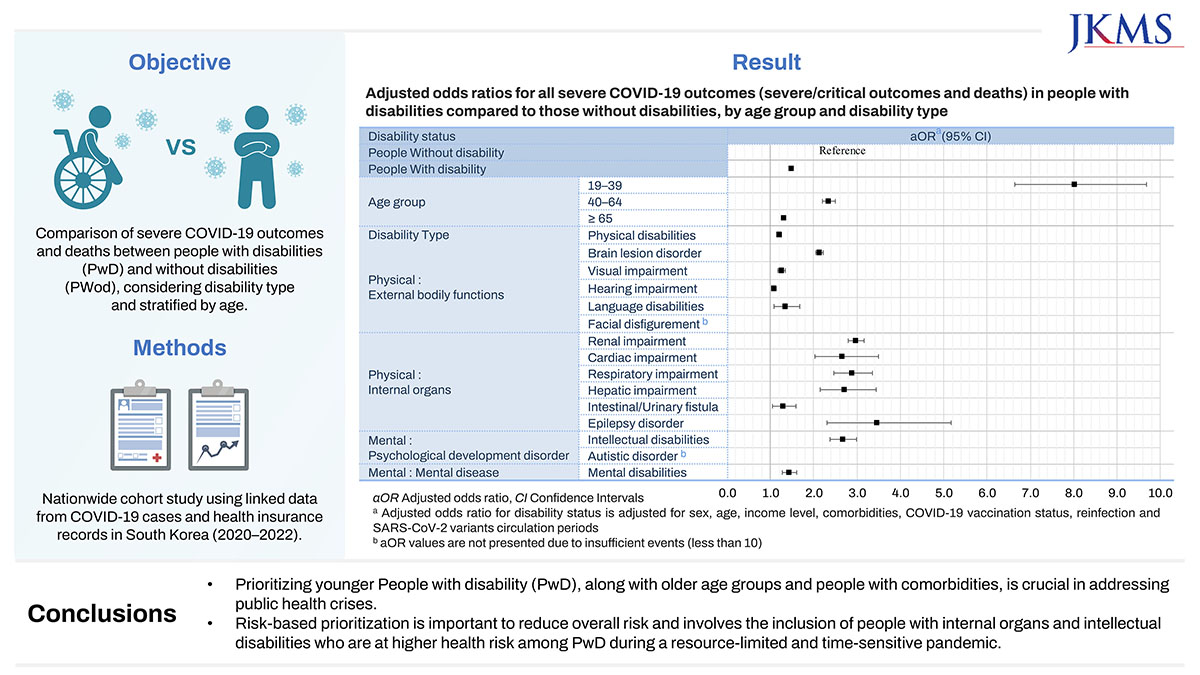
이 이미지는 2020~2022년 한국 데이터를 기반으로 한 전국 단위 코호트 연구 결과로, 장애인과 비장애인의 코로나19 중증 결과(중증/치명 사례 및 사망)를 비교하여 연령과 장애 유형별 조정 교차비(aOR)를 제시한다. ■ 연구 목적 - 장애인(PwD)과 비장애인(PWoD)의 코로나19 중증 위험도 비교. - 장애 유형과 연령(19~39세, 40~64세, 65세 이상)에 따라 분석. ■ 주요 결과 (aOR, 95% CI 기준) - 전체 비교: 장애인은 비장애인보다 중증 위험도가 높음. - 연령별: - 19~39세 그룹은 상대적으로 위험도가 낮으나, 장애인이 비장애인보다 높은 경향. - 40~64세 및 65세 이상 그룹에서는 장애인의 위험도가 더 높게 나타남. - 장애 유형별: - 외부 신체기능(Physical, external): 뇌손상, 시각·청각·언어 장애, 안면 손상 등에서 위험도 상승. - 내부 장기(Physical, internal): 신장, 심장, 호흡기, 간 기능 장애 등에서 위험도 높음. - 정신적 요인(Mental): 발달장애, 지적장애, 정신질환 그룹에서도 중증 위험이 증가. ■ 결론(Conclusions) - 장애인 중 특히 젊은 층, 고령자, 기저질환 동반자가 공중보건 위기에서 취약하다. - 자원·시간이 제한된 팬데믹 상황에서는 위험도 기반의 우선순위 설정이 필요하며, 내부 장기 및 지적 장애인을 포함한 고위험군을 반드시 고려해야 한다.
※ Source: Ryu BY et al., J Korean Med Science, 2025