Surveillance of Bacterial Infectious Disease Pathogens
Overview
- To monitor the current status of bacterial infectious diseases in the country, the system for monitoring waterborne and foodborne infectious disease pathogens (EnterNet) and respiratory bacterial infection pathogens (AriNet) is being operated.
- The pathogens collected through the operation of the monitoring system are utilized for early prediction of changes in the outbreak of bacterial infectious diseases and for preventing their spread through pathogen characteristic analysis.
Waterborne and Foodborne Infectious Disease Pathogen Monitoring Project (EnterNet)
- Collaborate with over 70 cooperative hospitals and 17 provincial and metropolitan health and environment research institutes to collect pathogens weekly and analyze key characteristics
- A laboratory-based pathogen monitoring system that comprehensively analyzes the outbreak region, timing, outbreak type, and pathogen characteristics to early predict and respond to the spread of infectious diseases
Target pathogens
Salmonella, pathogenic Escherichia coli, Campylobacter, Shigella, Vibrio parahaemolyticus, Vibrio cholerae, Clostridium perfringens, Staphylococcus aureus, Bacillus cereus, Listeria monocytogenes, Yersinia enterocolitica
Analysis items
: serotype, toxin type, antibiotic resistance trends, genotype, etc.
System diagram
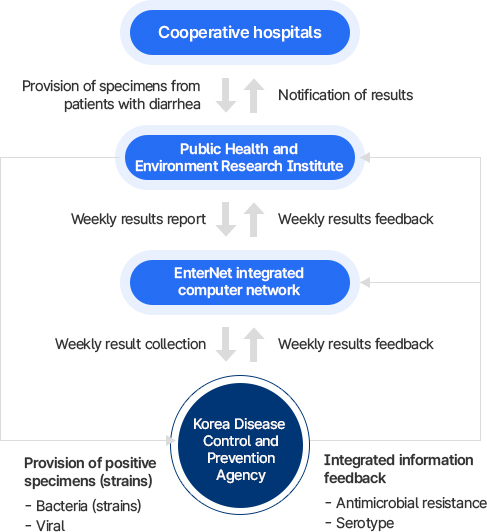
이 이미지는 감염병 검사와 결과가 질병관리청까지 보고·환류되는 과정을 단계별로 나타낸다. ■ 1단계: 협조병(의원) - 설사환자 등 의심 환자의 검체를 제공. - 검사 결과를 통보받음. ■ 2단계: 보건환경연구원 - 협조병(의원)으로부터 받은 검체를 검사. - 결과를 매주 보고하고, 다른 기관과 결과를 매주 환류함. ■ 3단계: EnterNet 통합전산망 - 보건환경연구원의 결과를 매주 수집. - 매주 결과를 환류하여 공유. ■ 4단계: 질병관리청 - EnterNet 통합전산망을 통해 결과를 취합·관리. - 필요 시 양성검체(세균·바이러스) 제공. - 결과를 토대로 통합 정보 환류: 항생제 내성, 혈청형 등 분석 정보를 하위 기관에 제공. ■ 종합 해석 검체는 협조병(의원) → 보건환경연구원 → EnterNet → 질병관리청으로 전달되며, 검사 결과와 분석 정보는 다시 각 단계로 환류되어 현장 대응 및 정책 결정에 활용된다.
- 양성검체(균주)제공
- 세균(균주)
- 바이러스
- 통합 정보 환류
- 항생제 내성
- 혈청형
Surveillance Project for Respiratory Bacterial Infection Pathogens (Ari-Net)
- A laboratory-based surveillance system focused on respiratory bacteria, operated to predict and respond to community respiratory infectious disease outbreaks early
- Weekly collection and analysis of pathogens isolated from pneumonia patients to analyze changes in pathogen distribution, epidemic patterns, and pathogen characteristics
Target pathogens
Corynebacterium diphtheriae, Streptococcus pneumoniae, Neisseria meningitidis, Haemophilus influenzae, Bordetella pertussis, Streptococcus pyogenes (scarlet fever), Legionella pneumophila, Mycoplasma pneumoniae, Chlamydia pneumoniae, etc.
Analysis items
: Serotype, toxin type, genetic type, antibiotic resistance trends, etc.
System diagram
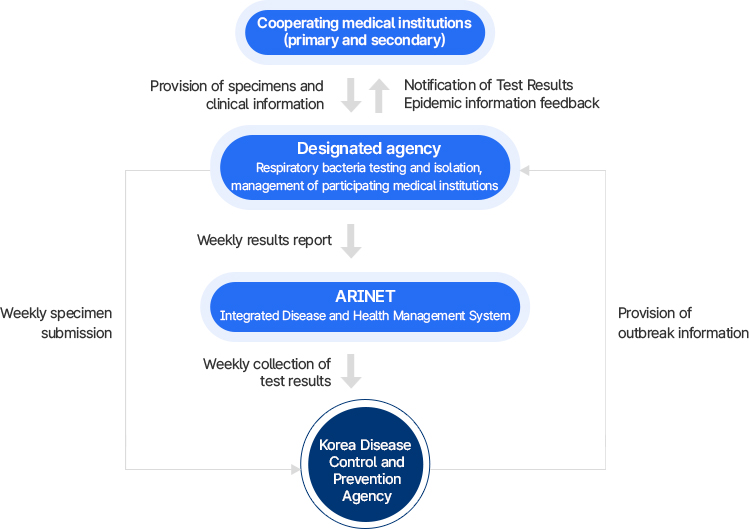
이 이미지는 협력의료기관에서 시작해 질병관리청으로 이어지는 호흡기 세균검사 결과 보고 체계를 단계별로 설명한다. ■ 1단계: 협력의료기관(1, 2차) - 검체와 임상 정보를 수탁기관에 제공. - 검사 결과 통보 및 발생 정보 환류를 받음. ■ 2단계: 수탁기관 - 호흡기 세균검사와 검체 분리 수행. - 참여 의료기관 관리 역할 포함. - 매주 결과를 ARINET에 보고. ■ 3단계: ARINET (질병보건통합관리시스템) - 각 수탁기관의 결과를 매주 수집. - 검사 결과와 발생 정보를 질병관리청으로 전달. ■ 4단계: 질병관리청 - 매주 검체를 수부받아 종합 관리. - 수탁기관 및 의료기관에 발생 정보 제공. ■ 종합 해석 검체와 검사 결과는 협력의료기관 → 수탁기관 → ARINET → 질병관리청의 순서로 보고되며, 질병관리청은 다시 발생정보를 환류하여 지역 의료기관과 연구기관에서 활용할 수 있도록 지원하는 구조다.