Purpose of the project
- Strengthening international cooperation to prevent and curb the spread of antibiotic resistance, enhancing national stature
Main Contents
Cooperation on self-assessment survey related to antibiotic resistance policy (TrACSS*)
* Tracking AMR Country Self-Assessment Survey
- The quadrilateral cooperation body* composed of major international organizations has been conducting annual self-surveys for WHO member countries since 2016 to compare the status of antibiotic resistance response by country and share the results.* (Composition) World Health Organization (WHO), World Organisation for Animal Health (WOAH), Food and Agriculture Organization (FAO), United Nations Environment Programme (UNEP) * (Check survey results) https://amrcountryprogress.org
- Korea has been participating in the survey since 2016.
Participation in the Global Antimicrobial Resistance and Use Surveillance System (GLASS*)
* GLASS: Global Antimicrobial Use and Resistance Surveillance System
- The World Health Organization (WHO) established the Global Antimicrobial Resistance Surveillance System (GLASS-AMR) in 2016 and the Antimicrobial Consumption Surveillance System (GLASS-AMC) in 2020 to generate and share international antimicrobial resistance data. * AMC: Antimicrobial Consumption * AMR: Antimicrobial Resistance
- Korea has been participating in the antimicrobial resistance surveillance system since 2016 and in the antimicrobial consumption surveillance system since 2023.
< Status of Participation in the Global Antimicrobial Resistance and Use Surveillance System (as of 2024) >
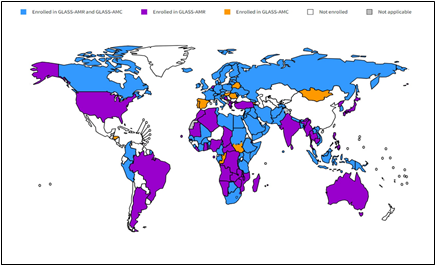
(Source: GLASS Dashboard)
Operation of the World Health Organization (WHO) Collaborating Centre for Antimicrobial Resistance
- The World Health Organization (WHO) designates specialized institutions as collaborating centers in various fields to ensure the successful implementation of international health projects, including antimicrobial resistance surveillance.
- The Korea Disease Control and Prevention Agency has been designated as a WHO Collaborating Centre for Antimicrobial Resistance (KOR-110) since 2021, providing support to WHO member countries to strengthen their antimicrobial resistance surveillance capacities.
Key Responsibilities
- Support for the development of an operational manual for antimicrobial resistance surveillance
- Provision of laboratory testing technical support to countries with inadequate antimicrobial resistance surveillance capabilities
- Implementing education and training programs
- Supporting the strengthening of laboratory testing capacities, including the operation of quality assessment programs
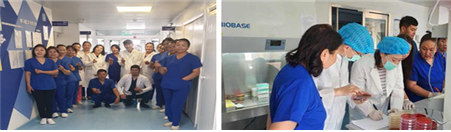
< Support for Mongolia’s Antimicrobial Resistance Surveillance Capacity >