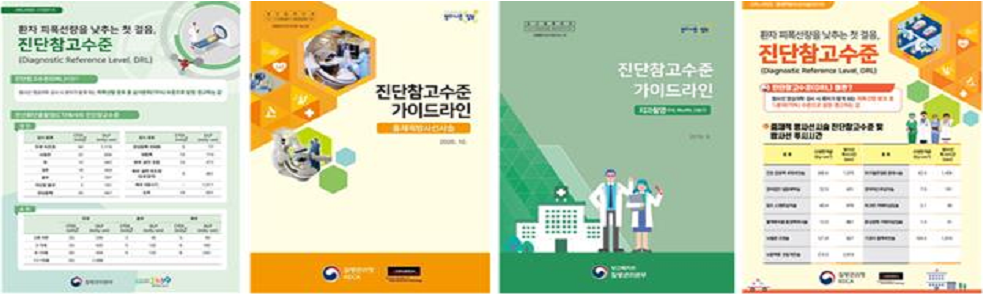
National Diagnostic Reference Levels
Meaning
- A medical radiation optimization management method recommended by the ICRP [International Commission on Radiological Protection] to reduce patient exposure doses
- A value that is set and recommended at the 75th percentile (third quartile) level, derived from collecting samples of exposure doses that patients receive during diagnostic imaging examinations
Necessity
- Medical institutions check the diagnostic reference levels during patient imaging examinations. If the radiation dose used is higher than the reference level, then they practice patient medical radiation optimization by adjusting the radiation dose of the examination equipment, minimizing the examination area, etc.
Current Status
- Korea is also establishing diagnostic reference levels in 5-year cycles, considering international cases such as the United Kingdom.
- A project to reset and expand these levels has been in progress since 2017. Over the last five years, the diagnostic reference levels have been reset and distributed to medical sites for interventional radiology procedures in 2020, fluoroscopy examinations in 2021, CT examinations in 2022, general and mammography examinations in 2023, and dental examinations in 2024.