
-
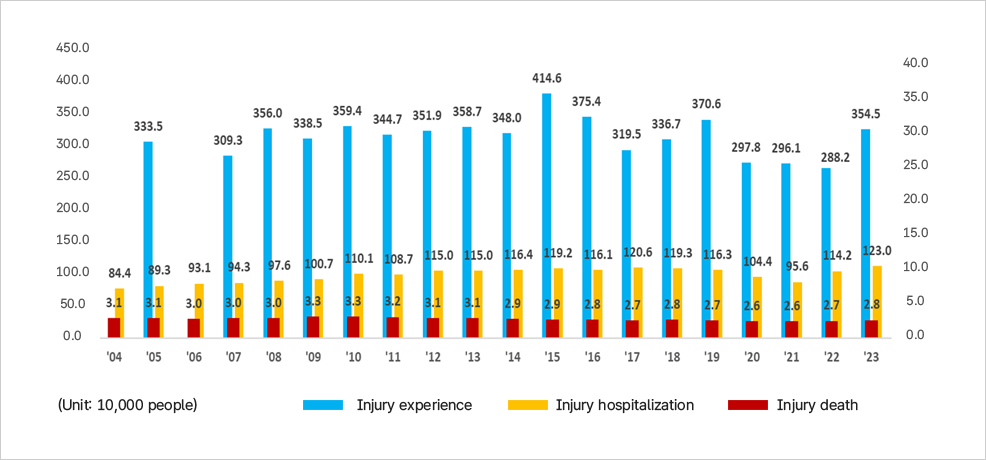
이 그래프는 2004년부터 2023년까지 손상 경험, 손상 입원, 손상 사망의 연도별 추이를 나타낸다.
- 손상 경험: 2004년 333.5명에서 2015년 414.6명으로 최고점을 기록한 뒤, 2020년 296.1명까지 감소했다가 2023년 354.5명으로 다시 증가했다.
- 손상 입원: 전반적으로 증가세를 보여 2004년 84.4명에서 2023년 123.0명까지 상승했다.
- 손상 사망: 연평균 약 2.6~3.3명 사이에서 비교적 일정하게 유지되었다.
의미: 손상 경험은 등락을 반복하면서 장기적으로는 감소 추세를 보이고 있으나, 손상으로 인한 입원은 꾸준히 증가하고 있다. 사망률은 큰 변동 없이 일정하게 유지된다.
-
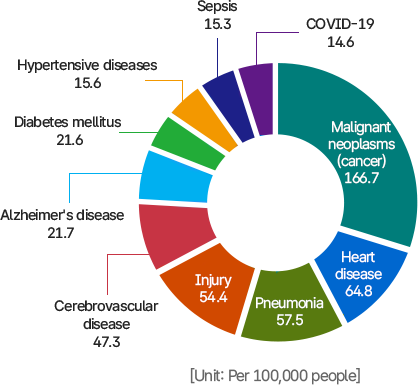
이 그래프는 인구 10만 명당 주요 사망원인별 사망률을 나타낸 원형 그래프이다.
- 악성신생물(암): 166.7명으로 가장 높은 비율을 차지한다.
- 심장질환: 64.8명
- 폐렴: 57.5명
- 손상: 54.4명
- 뇌혈관 질환: 47.3명
- 알츠하이머병: 21.7명
- 당뇨병: 21.6명
- 고혈압성 질환: 15.6명
- 폐혈증: 15.3명
- 코로나19: 14.6명
의미: 암이 가장 큰 사망원인으로 나타나며, 심장질환·폐렴·손상 등이 뒤를 잇는다. 감염성 질환(코로나19, 폐혈증)과 만성질환(당뇨병, 고혈압성 질환)도 주요 사망 요인으로 확인된다.
Source: Korea National Health and Nutrition Examination Survey (2023), In-depth Survey of Discharged Injury Patients (2023), Statistics on Causes of Death (2023)
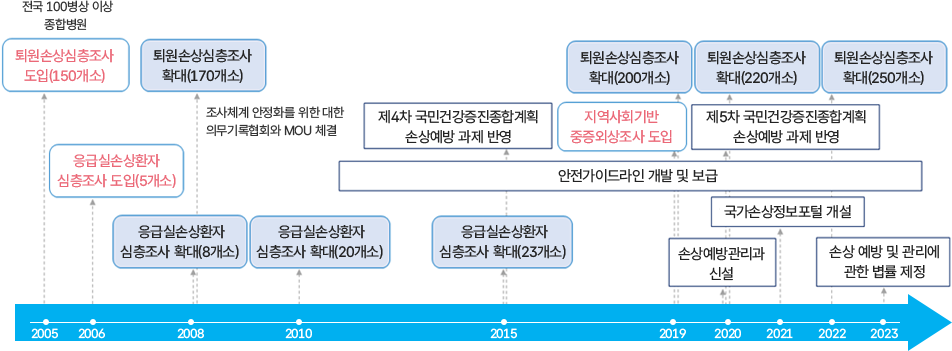
이 도표는 2005년부터 2023년까지 손상 경험·입원·사망 추이와 관련 제도의 변화를 연대표 형식으로 나타낸 것이다.
- 2005년: 퇴원손상심층조사(150개소) 도입
- 2006년: 응급실손상환자 심층조사(57개소) 도입
- 2009년~2015년: 응급실손상환자 심층조사 기관이 점차 확대(최종 233개소)
- 2013년: 제4차 국민건강증진종합계획에 손상예방 과제 반영
- 2018년: 지역사회기반 중증외상조사 도입
- 2019년: 안전가이드라인 개발 및 보급, 국가손상정보포털 개설
- 2020년: 손상예방관리과 신설
- 2021년: 제5차 국민건강증진종합계획에 손상예방 과제 반영
- 2022년: 손상 예방 및 관리에 관한 법률 제정
- 2005~2023년: 퇴원손상심층조사 기관이 지속 확대되어 250개소까지 증가
의미: 20년간 손상 경험·입원·사망의 추이를 지속적으로 모니터링하며, 제도적 기반 확충과 법제화로 손상 예방과 관리 체계가 강화된 것을 보여준다.
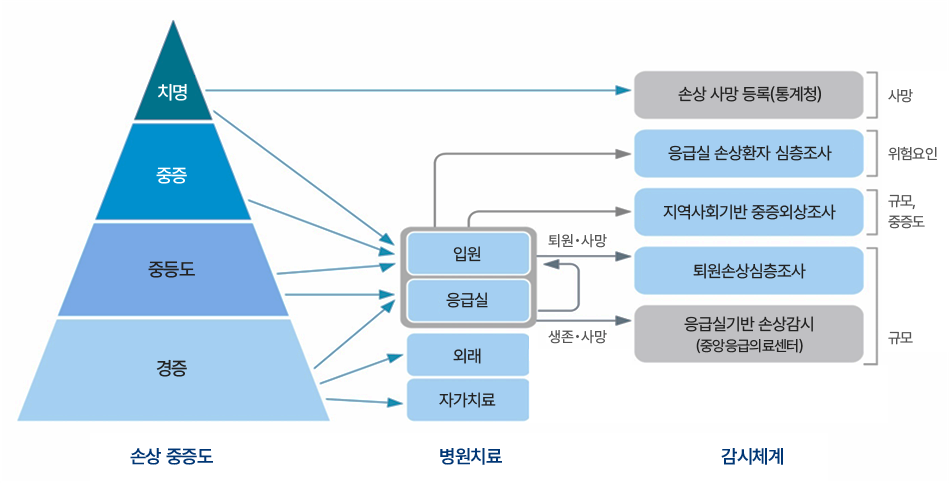
이 그림은 손상 중증도에 따른 병원치료 과정과 감시체계를 연계하여 나타낸 것이다.
- 손상 중증도: 경증 → 중등도 → 중증 → 치명 단계로 구분된다.
- 병원치료: 환자는 중증도에 따라 자가치료, 외래, 응급실, 입원으로 치료 과정을 거치며 생존 또는 사망으로 이어진다.
- 감시체계:
- 치명 단계는 손상 사망 등록(통계청)을 통해 관리된다.
- 중증 단계는 응급실 손상환자 심층조사, 지역사회기반 중증외상조사를 통해 위험요인과 규모, 중증도가 조사된다.
- 중등도와 경증은 입원과 응급실 치료 후 퇴원손상심층조사, 응급실기반 손상감시(중앙응급의료센터)를 통해 규모를 파악한다.
의미: 손상은 경증에서 치명까지 다양한 단계로 나타나며, 각각의 치료 과정은 국가 감시체계와 연계되어 손상 규모, 중증도, 위험요인, 사망률 등을 관리하는 데 활용된다.