컨텐츠 영역
Improving Public Awareness of Cardiovascular and Cerebrovascular Diseases
Objective
- To expand awareness and practice of the "9 Life Rules for the Prevention and Management of Cardiovascular and Cerebrovascular Diseases."
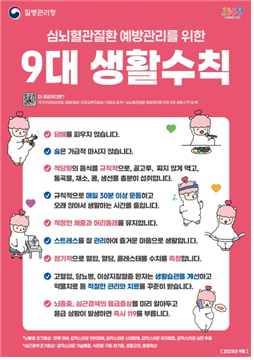
This image presents the nine key lifestyle guidelines for the prevention and management of cardio-cerebrovascular diseases, illustrated with visual aids.
- Do not smoke.
- Avoid drinking alcohol as much as possible.
- Eat appropriate portions regularly. (Maintain a balanced diet, limit salt intake, and include sufficient whole grains, vegetables, legumes, and fish.)
- Exercise regularly for at least 30 minutes a day and reduce the amount of time spent sitting.
- Maintain a healthy weight and waist circumference.
- Manage stress effectively and maintain a positive and enjoyable lifestyle.
- Check blood pressure, blood glucose, and cholesterol levels regularly.
- Patients with hypertension, diabetes, or dyslipidemia should improve lifestyle habits and, if necessary, adhere to continuous medication treatment.
- Learn the warning signs of stroke and myocardial infarction in advance, and immediately call 119 in case of an emergency.
Meaning: This emphasizes that cardio-cerebrovascular diseases can be effectively prevented and managed through healthy lifestyle changes, regular health monitoring, and prompt response to emergency situations.
Content
- (Red Circle Campaign) For one month in September centered around the Cardiovascular and Cerebrovascular Disease Prevention and Management Week (September 1 – September 7), the Korea Disease Control and Prevention Agency and local governments jointly conduct the “Know Your Numbers, Red Circle Campaign.” What is the “Know Your Numbers, Red Circle Campaign?” This project intends to prevent cardiovascular and cerebrovascular diseases by helping people understand and manage their own blood pressure, blood sugar, and cholesterol levels.
- (Promotion of early recognition and response to severe/emergency conditions) Distribution of information on early symptom recognition and response measures for stroke and myocardial infarction.
- Early Symptoms of Stroke
- Sudden weakness in the face, arm, or leg on one side
- Sudden slurred speech or difficulty understanding others' speech
- Sudden loss of vision in one eye, loss of half of the visual field in both eyes, or double vision
- Sudden dizziness or difficulty maintaining balance
- Sudden severe headache unlike any experienced before
- Early Symptoms of Myocardial Infarction
- Sudden severe pain, pressure, or a crushing sensation in the chest
- Sudden severe pain or discomfort in the jaw, neck, or back
- Sudden severe shortness of breath
- Sudden pain or discomfort in the arm or shoulder
- How to Respond When Early Symptoms Occur
- Call 119 for help without delay.
- Go to a hospital capable of providing acute care.
- It is dangerous for the patient to drive.
- Do not wait for family to arrive.
- Do not think the symptoms will just go away.
- Do not wait for an outpatient visit, even if it is night or the weekend.
- Early Symptoms of Stroke