컨텐츠 영역
Project Overview
Background
Need to respond to the infodemic*, such as incorrect health behaviors and unnecessary medical activity caused by exposure to inaccurate and unverified health information on the internet
A portmanteau of “information” and “epidemic,” meaning “an overwhelming flood of information on an issue that is inaccurately amplified and causes side effects.”- 59.3% of internet users use the internet to search for health and medical-related information
(Ministry of Science and ICT, "2024 Survey on Internet Usage")
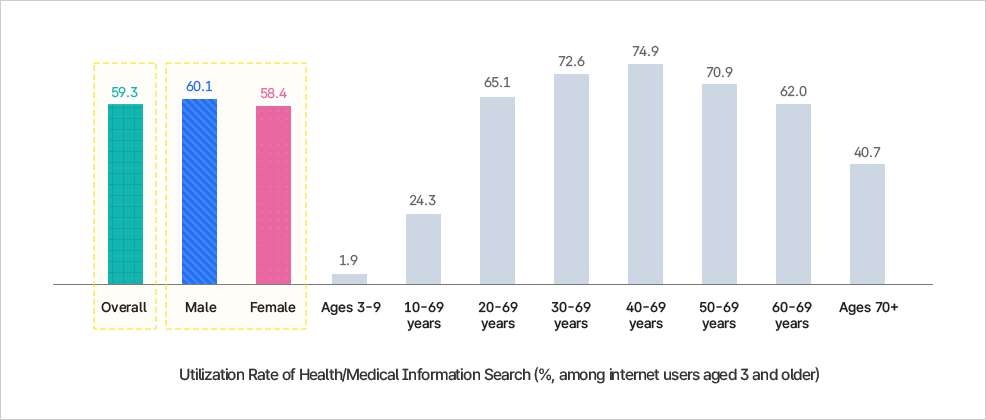
This graph shows the percentage (%) of health and medical information search usage among Internet users aged 3 and older, broken down by gender and age group.
- Total: 59.3%
- By gender: Men 60.1%, Women 58.4%
- By age group:
- Ages 3–9: 1.9%
- Teens: 24.3%
- 20s: 65.1%
- 30s: 72.6%
- 40s: 74.9% (highest)
- 50s: 70.9%
- 60s: 62.0%
- Ages 70 and over: 40.7%
Meaning: The usage rate of searching for health and medical information is highest among people in their 40s and gradually decreases with increasing age. The usage rate among children (ages 3–9) is extremely low.
Purpose
To provide scientific, evidence-based health information at the national level and to vitalize the use of health information.
Project Details
Production of Evidence-based Health Information
The health information provided by the National Health Information Portal is verified content created with the direct participation, in writing and supervision, by experts selected through specialized academic societies in each field.
- Development of customized health information for different target audiences, considering major topics of public interest
- Provision of key health information and health practice messages monthly (Health Information of the Month)
- Content quality evaluation and rewriting according to the content management system
Creation and Vitalization of a User-friendly Environment
- Provision of consumer participation events, newsletter subscription services, etc. to attract public interest and provide user-centric services
- Acquirement of web accessibility quality certification and implementing website improvements to enhance accessibility for vulnerable groups such as the elderly and disabled
- Application of the Korea Open Government License and real-time disclosure and provision of health information (provision of API) to vitalize information utilization